Shuffleboard is one of those brilliant games that lures you in with its simplicity and then keeps you coming back because there is always more to learn. Whether you have played a few casual rounds on a shuffle lane at VGolf Brighton or you are yet to slide your first puck, you have probably asked yourself the same question: how long does it take to master shuffleboard?
The truth is that the basics can be picked up in minutes. Getting genuinely good, on the other hand, takes dedicated practice, a willingness to experiment with different shots, and a solid understanding of shuffleboard strategy. In this guide, we break down the learning curve, the key skills you need to develop, and the shuffleboard tips that will help you progress from a total beginner to a competitive player. If you are looking for group activities in Brighton that combine fun with a genuine skill challenge, this is the game for you.
How to Play Shuffleboard: The Basics You Can Learn in Minutes
One of the greatest things about the shuffleboard game is its accessibility. The rules are straightforward and most people feel comfortable playing within a single session. Players take turns sliding weighted pucks down a long, smooth surface, aiming to land them in the highest scoring zones while trying to knock their opponent’s pucks out of play. It really is that simple to get started.
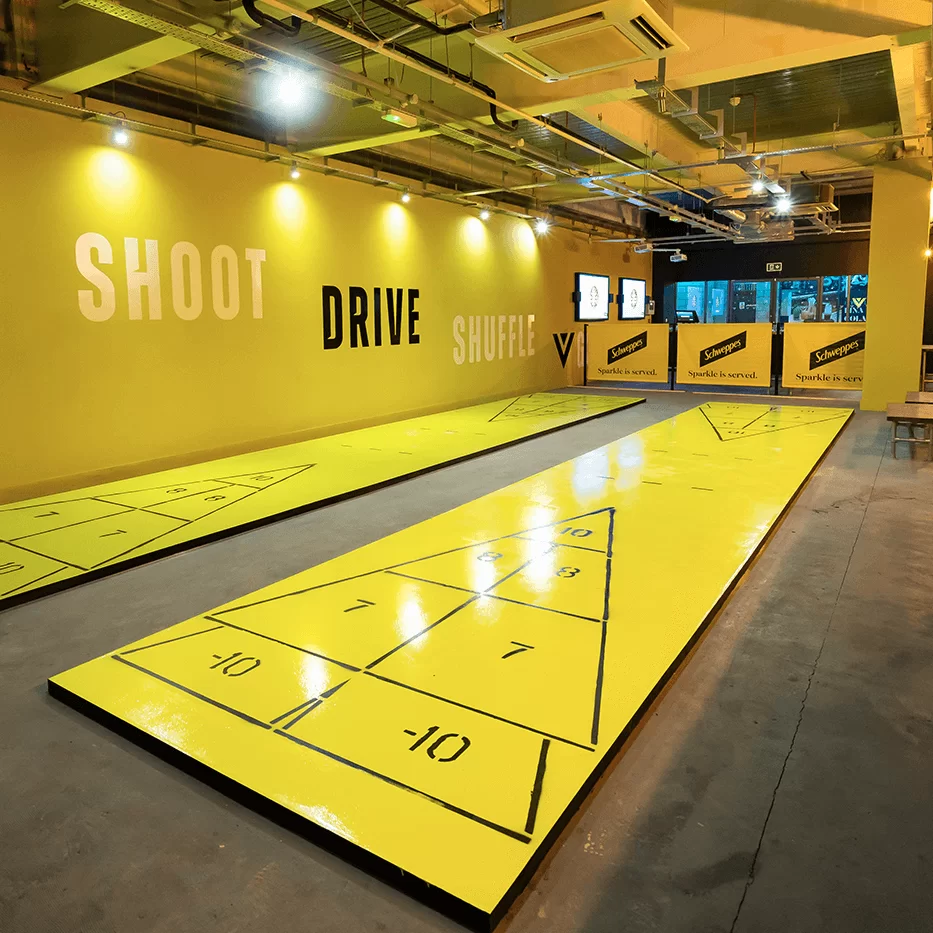
At VGolf Brighton, our shuffle lane and shuffle table are set up so that first timers can jump straight in. The scoring zones are clearly marked, the pucks glide beautifully on the polished surface, and our team is always happy to walk you through the rules if you need a hand. Within five to ten minutes, you will understand the objective, the turn structure, and the basic scoring. That is the easy part. The journey from understanding the rules to truly mastering shuffleboard skills is where things get interesting.
Why Shuffleboard Is Easy to Learn but Difficult to Master
Shuffleboard has a reputation as a game that is easy to learn but hard to master, and that reputation is well earned. The initial barrier to entry is low because you only need to slide a puck down a flat surface. However, the deeper you get into the game, the more you realise just how much nuance is involved.
Force and precision are everything. A puck that is pushed too hard will fly off the end of the board, while one that is sent too gently will fall short of the scoring zone entirely. Finding that sweet spot takes repetition and a feel for the surface. Beyond raw power control, you also need to factor in angles, the positions of other pucks on the board, and the overall strategy for each round. There is a mental game at play alongside the physical one, and that combination is what makes competitive shuffleboard so rewarding.
Most players start to feel genuinely competent after a few sessions of focused play. If you are visiting our games room in Brighton regularly and making a conscious effort to refine your technique, you could see real improvement within a few weeks. True mastery, though, is an ongoing process. Even experienced players continue to discover new tactics and refine their shot control over months and years.
Essential Shuffleboard Strategy Tips to Improve Your Game
If you want to shorten the learning curve, focusing on strategy is just as important as practising your throw. Here are the core shuffleboard strategy areas that separate casual players from skilled competitors.
Reviewing Your Opponent’s Weaknesses
One of the most overlooked shuffleboard tips is to pay attention to how your opponent plays. Do they consistently overshoot? Do they struggle with precision on angled shots? Identifying patterns in their play allows you to adjust your own strategy accordingly. If your opponent tends to leave pucks in vulnerable positions, you can plan knock off shots to clear the board in your favour.
Playing With Puck Weight and Control
Understanding how different levels of force affect your puck is fundamental to improving your shuffleboard game. A lighter touch keeps your puck in the near scoring zones, while a firmer push sends it towards the higher value areas at the far end of the table. Developing a feel for puck weight and learning to vary your force deliberately is one of the most impactful shuffleboard skills you can build. The key is consistency. A smooth, controlled stroke will always outperform an erratic, forceful one.
Working With Angles and Side Rails
The side rails on a shuffleboard table are not just boundaries. They are tools. Learning to use bank shots, where your puck ricochets off the rail at an angle, opens up a whole new dimension of play. Angled shots allow you to reach scoring positions that would be impossible with a straight push, and they can also be used to navigate around blocking pucks placed by your opponent. Mastering angles takes time and patience, but it is one of the most satisfying aspects of indoor shuffleboard.
Protecting Your Pucks With Blocking
Once you have a puck sitting in a high scoring zone, protecting it becomes a priority. Blocking involves placing subsequent pucks in front of your scoring puck to shield it from being knocked off by your opponent. This is a core element of shuffleboard strategy and it requires you to think several moves ahead. Good blocking turns each round into a tactical battle, and it is one of the reasons shuffleboard works so well as a competitive social activity.
Different Types of Shuffleboard Shots You Should Know
Learning a variety of shots is essential if you want to progress beyond the basics. Each shot type has its own purpose and mastering them will give you a significant competitive edge.
The Free Shot
This is the most basic shot in shuffleboard and the one every beginner learns first. The aim is simply to slide your puck into a scoring zone without worrying about other pucks on the board. It is the foundation upon which all other techniques are built, and perfecting your accuracy with free shots should be your first training goal.
The Knock Off Shot
When your opponent has a well placed puck in a high scoring area, the knock off shot is your answer. The objective is to hit their puck with enough force to push it out of the scoring zone, or ideally off the board entirely, while keeping your own puck in play. This shot requires a good read of distance and precise control over your throwing force.
The Stick Shot
A stick shot is designed to land your puck in a specific spot and have it stay there without sliding further. It demands excellent control over the speed of your throw and a strong feel for the playing surface. The stick shot is especially useful when you need to place a puck in a tight scoring position without disturbing your other pucks nearby.
The Bump Shot
The bump shot is a clever technique where you gently push one of your own pucks further into a higher scoring zone by sliding another puck into it. It requires a delicate touch and precise aim, but when executed well, it can dramatically increase your score in a single turn.
The Spin Shot
Also known as the English shot or curved shot, the spin shot is one of the more advanced techniques in shuffleboard. By applying spin to the puck as you release it, you can curve its path across the board. This is particularly useful for navigating around obstacles or reaching awkward positions. The spin shot takes considerable practice to master and is often considered the hallmark of an experienced player.
The Hangar Shot
The hangar shot is arguably the most difficult and dramatic shot in the shuffleboard game. The goal is to slide your puck so that it hangs over the far edge of the board without falling off, earning maximum points. It demands an exceptional feel for force and distance, and pulling one off in a competitive game is a genuine thrill. This is the kind of shot that separates recreational players from those who have truly invested time in mastering the game.
How Long It Really Takes to Build Competitive Shuffleboard Skills
So, back to the big question. How long does it take to master shuffleboard? The answer depends entirely on what you mean by “master.”
If your goal is to understand the rules and play a fun, casual game with friends, you can get there in a single session. Most people who visit our shuffle lane at VGolf Brighton are up and playing within minutes, laughing and competing from the very first round.
If you want to develop solid table shuffleboard skills, including accurate free shots, reliable blocking, and basic knock off techniques, expect to invest a few weeks of regular practice. Playing once or twice a week over the course of a month will see noticeable improvement in your accuracy and control.
For those aiming to reach a truly competitive level, where you can execute spin shots, hangar shots, and complex multi turn strategies with consistency, you are looking at several months of dedicated play. Like any skill based game, shuffleboard rewards patience and practice. The more you play, the more intuitive the game becomes, and the more creative your shot selection will be.
The game of shuffleboard has roots stretching back to 15th century England, and it has endured for centuries precisely because that progression from beginner to advanced player is so enjoyable. Every session teaches you something new, and there is always another level to reach.
Practice Shuffleboard in Brighton at VGolf
There is no better way to develop your shuffleboard skills than by getting regular practice on a quality surface. At VGolf Brighton, our shuffle lane and shuffle table are maintained to a high standard, giving you a consistent playing experience every time you visit. Whether you are popping in for a quick solo practice session or bringing a group of friends for an evening of competitive socialising, you will find everything you need to improve your game.
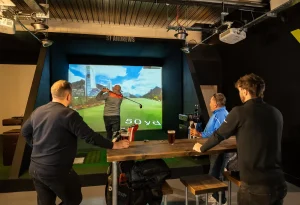
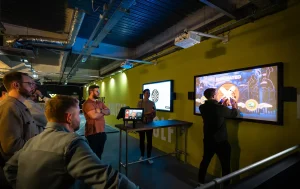
Beyond shuffleboard, our games room in Brighton offers a fantastic selection of activities including golf simulators, AR darts, beer pong, and American pool. It makes for a brilliant venue for group activities in Brighton, whether you are organising a casual night out, a birthday celebration, or a corporate team building event. Our arcade games and indoor games are designed for players of all abilities, so everyone can join in and have a great time.
Your Shuffleboard Journey Starts Here: Are You Ready to Slide Into Action?
Mastering shuffleboard is not about overnight success. It is about enjoying the process, celebrating small wins, and gradually building your skills through practice and play. From your very first free shot to the day you pull off a perfect hangar, every step of the journey is rewarding. The question is not really how long it takes to master shuffleboard. It is how soon you are going to start.
If you are ready to put these shuffleboard tips into practice, come and visit us at VGolf Brighton. Our shuffle lanes are waiting, and our team is always on hand to help you get started. For bookings and enquiries, drop us an email at info@vgolfbrighton.co.uk or visit our contact page. We would love to see you on the lane.
—
Frequently Asked Questions
How difficult is shuffleboard to master?
Shuffleboard is very easy to pick up but genuinely challenging to master. The basic rules can be learned in minutes, but developing advanced techniques like spin shots, hangar shots, and strategic blocking takes weeks or months of regular practice. The beauty of the game lies in that progression.
What strategies help players improve at shuffleboard?
Key strategies include learning to control your throwing force, using the side rails for angled bank shots, blocking your high scoring pucks from opponents, and studying your opponent’s weaknesses to exploit gaps in their play. Combining these elements into a cohesive game plan is what separates good players from great ones.
What types of shuffleboard shots should I learn first?
Start with the free shot to build basic accuracy, then move on to knock off shots and stick shots. Once you are comfortable with those, progress to bump shots and, eventually, the more advanced spin shot and hangar shot. Each new technique adds another layer to your game.
Can I play shuffleboard at VGolf Brighton?
Absolutely. VGolf Brighton offers both a shuffle lane and a shuffle table as part of our games room experience. Whether you are a first time player or a seasoned shuffleboard fan, you are welcome to come along and play. Visit our shuffle page for more details.
Is shuffleboard a good group activity in Brighton?
Shuffleboard is one of the best group activities in Brighton because it is easy for everyone to join in, regardless of experience. It creates friendly competition and plenty of laughs, making it ideal for nights out with friends, birthday parties, stag and hen dos, or corporate events. Check out our group bookings page to plan your visit.
How often should I practise to get better at shuffleboard?
Playing once or twice a week is enough to see steady improvement in your accuracy and shot control. Focused practice, where you work on specific shot types rather than just playing casually, will accelerate your progress even further. The more intentional your practice sessions, the faster you will develop your shuffleboard skills.