The Secret to Dominating the Shuffle Lane Every Single Time
Shuffleboard is one of those brilliant indoor games that looks deceptively simple but rewards genuine skill, smart strategy, and a well-practised technique. Whether you have been sliding pucks for years or you are picking one up for the very first time, there is always room to sharpen your shuffleboard skills and elevate your game.
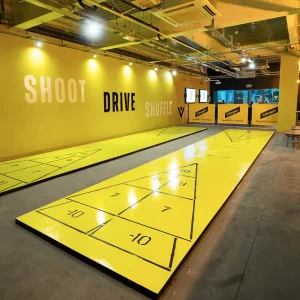
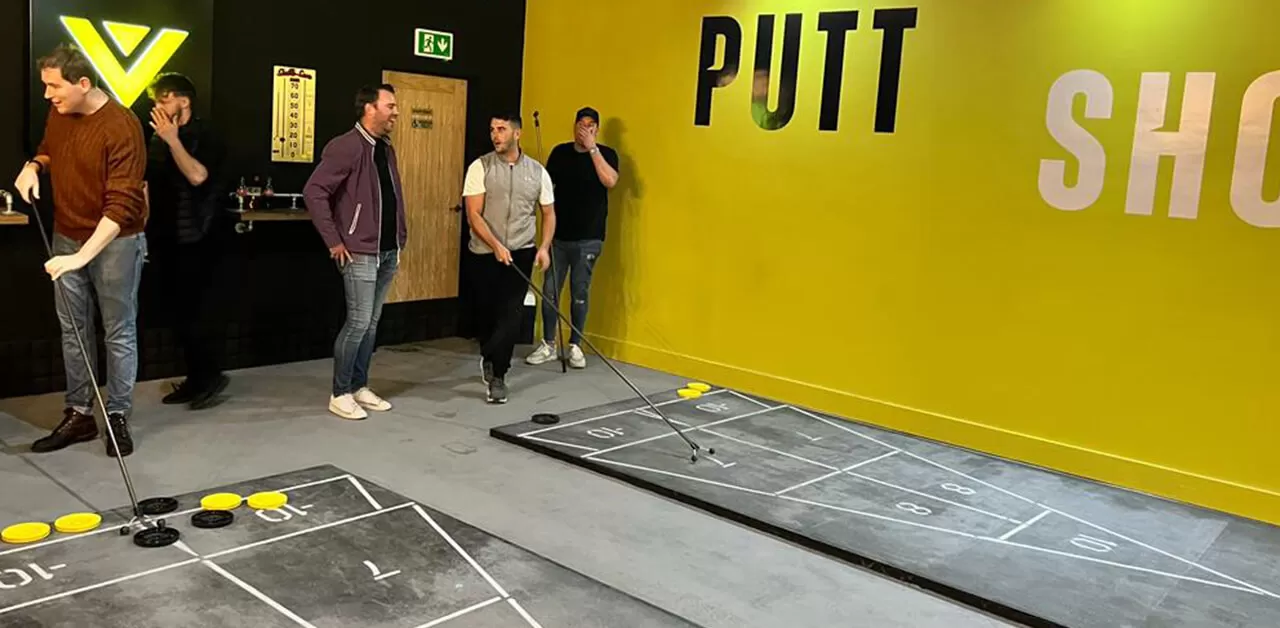
Here at VGolf Brighton, our Shuffle Lane and Shuffle Table are among the most popular attractions in our games room, and we see players of every ability level step up and have a fantastic time. But we have also noticed that a few small adjustments to your shuffleboard technique can make an enormous difference to your accuracy, consistency, and overall enjoyment.
That is exactly why we have put together this guide. Below, you will find five simple steps that cover everything from your grip and stance to advanced shuffleboard strategy and shot selection. By the time you have worked through each step, you will have the knowledge and confidence to perfect your shuffleboard technique and impress everyone at the lane.
So, let us get into it.
Step 1: Master Your Grip and Stance for Better Shuffleboard Technique
Every great shuffleboard shot starts before the puck even leaves your hand. Your grip and your stance form the foundation of your entire technique, so it is well worth spending a little time getting them right.
When it comes to grip, aim for a hold that feels relaxed but controlled. Place your fingertips behind and slightly on top of the puck, keeping your thumb gently resting on the side or top edge. You want enough contact to guide the puck with precision but not so much pressure that you tense up and lose fluidity in your release. A common mistake among beginners is gripping the puck too tightly, which leads to jerky, inconsistent shots.
Your stance is equally important. Stand with your feet roughly shoulder-width apart and position your body so that your dominant hand lines up comfortably with the lane. Keep your weight slightly forward on the balls of your feet, which helps you maintain balance throughout the sliding motion. Many experienced players also use the rail to steady their non-shooting hand, which provides additional stability and helps with alignment.
According to the Table Shuffleboard Federation, proper positioning and a consistent approach are key elements of competitive play. Even if you are just playing for fun at our venue, adopting a solid stance will immediately improve your control and accuracy on the shuffle lane.
The key takeaway here is consistency. Practise your grip and stance until they feel natural, and you will notice that your shots become more predictable and reliable every single time you step up to play.
Step 2: How to Play Shuffleboard With Precision and Control Your Speed
One of the most important shuffleboard tips you will ever receive is this: speed control is everything. It does not matter how accurate your aim is if your puck sails off the end of the lane or stops frustratingly short of the scoring zone.
Learning how to control the weight of your shot is a skill that separates casual players from those who genuinely excel at shuffleboard. The trick is to develop a smooth, pendulum-like arm movement rather than relying on brute force. Think of your arm as a gentle swing, with the puck releasing at the lowest point of the arc. This approach gives you far greater control over how fast and how far the puck travels.
Start by practising medium-weight shots that aim to land your puck comfortably in the middle scoring zones. Once you can consistently land in that range, begin experimenting with lighter touches for short placements and firmer pushes for longer shots. Over time, you will develop an instinctive feel for how much force is needed in different situations.
It is also worth paying attention to the playing surface itself. Indoor shuffleboard surfaces can vary in speed depending on how they are maintained and the type of wax or silicone applied. At VGolf Brighton, our lanes are kept in excellent condition with smooth, well-maintained surfaces and high-quality pucks, so you can expect a consistent playing experience every visit. However, it is always a good idea to take a few warm-up slides at the start of each session to get a feel for the lane speed on the day.
Understanding speed also ties into shuffleboard scoring. If you consistently overshoot or undershoot the high-scoring zones, your point totals will suffer. Practise until you can place your puck exactly where you want it, and your scores will climb rapidly.
Step 3: Develop Your Aim and Accuracy on the Shuffle Lane
With a solid grip, a stable stance, and good speed control in place, the next step in perfecting your shuffleboard technique is to refine your aim and accuracy. This is where your practice really starts to pay off.
Aiming in shuffleboard is not just about looking at where you want the puck to end up. It involves reading the lane, understanding the angles, and anticipating how the puck will behave as it slides across the surface. A great tip is to pick a specific target point on the lane rather than aiming vaguely towards the far end. Focusing on a small, precise target naturally tightens your accuracy.
One popular technique used by skilled players is the side-wheeling shot, where you use the rail to guide your shooting hand. This method provides a natural track for your arm to follow, resulting in straighter, more controlled shots. It is particularly effective on longer shuffle lanes where even a small deviation in angle can send your puck wide of the mark.
For shots that require a bit more creativity, consider experimenting with a free shot, where you release the puck without using the rail as a guide. Free shots give you greater flexibility to target specific areas of the lane but require more practice to execute consistently. As the Masters of Traditional Games guide to shuffleboard notes, understanding the geometry of the playing surface is a fundamental part of the game.
Whichever method you prefer, the principle remains the same: practise your aim regularly, and do not be afraid to adjust your technique based on what you observe during gameplay. Each shuffle lane can behave slightly differently, so adaptability is just as important as raw accuracy.
Step 4: Shuffleboard Strategy and Shot Selection That Wins Games
Once your fundamental shuffleboard skills are in good shape, it is time to start thinking strategically. Shuffleboard is not just about sliding pucks into scoring zones. It is a game of positioning, anticipation, and tactical decision-making, and your shot selection can often be the difference between winning and losing.
There are several key shot types that every player should have in their repertoire. The knock-off shot is a powerful offensive and defensive tool. As the name suggests, this involves using your puck to knock an opponent’s puck off the scoring area, either removing their points or improving your own position on the lane. Mastering the knock-off requires good aim and the right amount of force, but it is an incredibly satisfying shot to pull off.
The bump shot is another useful technique. Rather than targeting your opponent’s puck, a bump shot involves gently nudging one of your own pucks further into a higher-scoring zone. This is a lower-risk play that can quietly accumulate extra points without drawing too much attention from your opponents.
Then there is the guard shot, sometimes called a safe shot. This involves placing your puck in a position that shields one of your existing scoring pucks from being knocked off by your opponent. It is a defensive move that can be incredibly frustrating for the other team and is a hallmark of smart shuffleboard strategy.
Knowing when to play aggressively and when to play it safe is a skill that develops over time. Pay attention to the scoreboard, consider how many pucks are left in the round, and think about what your opponent is likely to do next. The best shuffleboard players do not just react to the current state of the lane. They think two or three moves ahead.
At VGolf Brighton, our shuffle lanes and tables provide the perfect environment to experiment with these different strategies. Whether you are enjoying a casual game with friends or competing in a group challenge, strategic play adds a whole new layer of excitement to the experience.
Step 5: Practice With Both Hands and Adapt Your Shuffleboard Technique
This final step might sound surprising, but learning to play shuffleboard with both hands can be a genuine game-changer. Most players naturally favour their dominant hand, and that is perfectly fine for everyday play. However, developing some ability with your non-dominant hand opens up new angles, new shot options, and greater overall adaptability.
Think about it this way: certain positions on the lane are much easier to reach from one side than the other. If you can only shoot comfortably with your right hand, you may find yourself stretching awkwardly or compromising your stance when a left-side shot would be ideal. By practising with both hands, even at a basic level, you give yourself more options and reduce the chances of being caught out by an awkward angle.
Beyond ambidexterity, this step is also about broader adaptability. No two games of shuffleboard are exactly the same. The lane conditions might vary, your opponents might play in unexpected ways, and the scoring situation might demand shots you have not tried before. The players who improve the fastest are those who stay curious, keep experimenting, and are willing to step outside their comfort zone.
Our team at VGolf Brighton is always happy to offer shuffleboard tips and guidance when you visit. Whether you are a complete beginner looking to learn the basics or an experienced player wanting to refine your technique, our friendly staff can help point you in the right direction.
You Are Now Ready to Own the Shuffle Lane
Perfecting your shuffleboard technique does not happen overnight, but by following these five simple steps, you will be well on your way to becoming a more confident, consistent, and strategic player. From nailing your grip and stance to developing clever shot selection and learning to adapt on the fly, each step builds on the last to create a well-rounded set of shuffleboard skills.
The best part is that shuffleboard is a game you can enjoy while you improve. Every session at the lane is an opportunity to practise, learn, and have a great time with friends, family, or colleagues. And there is no better place to do that than at VGolf Brighton, where our well-maintained shuffle lanes and tables, relaxed atmosphere, and friendly team create the perfect setting for players of all abilities.
Whether you are planning a casual visit, a group booking, or even a corporate event, shuffleboard is a brilliant addition to any outing. Combine it with our other activities, including golf simulators, AR darts, and American pool, for an unforgettable experience.
Frequently Asked Questions About Shuffleboard Technique
What are the basic shuffleboard rules I need to know before playing?
Shuffleboard is played by sliding weighted pucks down a long, smooth lane towards a scoring zone at the far end. Players take turns, and points are awarded based on where the pucks come to rest. The player or team with the most points at the end of all rounds wins. At VGolf Brighton, our team is on hand to walk you through the shuffleboard rules before you start, so you can dive straight into the fun.
How long does it take to improve my shuffleboard technique?
Most players notice a real improvement in their shuffleboard technique within just a few sessions. Focusing on the fundamentals, such as grip, stance, and speed control, tends to yield results quickly. The more you play, the more instinctive your technique becomes, so regular practice at the shuffle lane is the fastest way to level up.
Is shuffleboard suitable for beginners and families?
Absolutely. Shuffleboard is one of the most accessible indoor games around. It is easy to pick up, does not require any special fitness or prior experience, and is great fun for all ages. Our shuffle lanes and tables at VGolf Brighton are designed for players of all skill levels, making it a perfect choice for family outings or group get-togethers.
What is the difference between a shuffle lane and a shuffle table?
A shuffle lane is typically a longer playing surface where you slide pucks towards a scoring area at the far end, while a shuffle table is a more compact version often found in bars and games rooms. Both follow similar shuffleboard rules, though the size of the surface can affect strategy and shot selection. We offer both at VGolf Brighton, so you can try each and see which you prefer.
How does shuffleboard scoring work?
Shuffleboard scoring is straightforward. The playing surface is marked with numbered zones, and your puck must be fully within a zone to earn those points. Typically, only the player or team whose puck is closest to the far end scores in each round. Pucks that hang over the edge of the board without falling off often earn bonus points. Check the specific rules at your venue, or ask our staff for a quick rundown before your game.
Can I book a shuffleboard session at VGolf Brighton?
Yes, you can. Simply head to our booking page to reserve your preferred time slot. We offer shuffle lanes and shuffle tables alongside a wide range of other games, so you can easily build a full session of indoor entertainment for your group.
Ready to Slide Into Action? Let Us Help You Get Started
If you are feeling inspired to put these shuffleboard tips into practice, we would love to welcome you to VGolf Brighton. Our venue at Brighton Marine Village is the perfect place to sharpen your shuffleboard technique while enjoying great food, drinks, and a brilliant selection of games.
Got questions about booking, availability, or what to expect on the day? Get in touch with our team at info@vgolfbrighton.co.uk or visit our Contact Us page for all the details. We look forward to seeing you at the shuffle lane soon.